
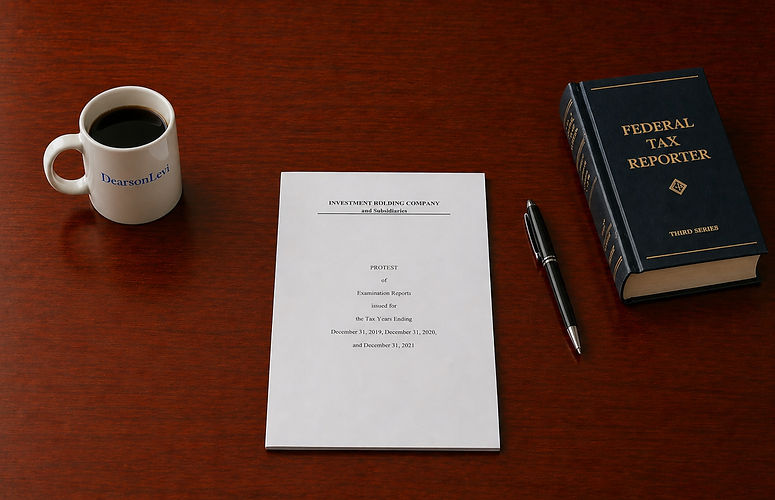
How to Prepare an IRS Appeals Protest:
Strategy, Structure, and What Matters Most

Filing a protest is the gateway to IRS Appeals - but it is also one of the most misunderstood steps in the process.
A well-prepared protest does more than disagree with the Internal Revenue Service. It establishes the legal and factual framework that will define how your case is evaluated in Appeals.
What Is an IRS Appeals Protest
An IRS Appeals protest is a written submission that:
-
Identifies disputed issues
-
Explains the taxpayer’s position
-
Provides supporting legal authority and facts
It is not simply a response - it is the foundation of your Appeals strategy.
Why the Protest Is So Important
Many taxpayers assume Appeals is where the case is built.
This is incorrect.
Appeals evaluates the existing administrative record.
A weak protest:
-
Limits your arguments
-
Reduces credibility
-
Weakens negotiating leverage
A strong protest:
-
Frames issues in terms of litigation risk
-
Guides how the Appeals Officer evaluates the case
-
Creates a clear path to settlement
Many weaknesses in Appeals cases originate at this stage. See common mistakes in IRS Appeals.
The quality of your protest often determines your negotiating position before Appeals discussions even begin.
Core Elements of a Strong Protest
A persuasive protest typically includes:
1. Statement of Facts
-
Clear, consistent, and complete
-
Avoids ambiguity or contradiction
-
Aligns with supporting documentation
2. Issues Presented
-
Precisely defined
-
Narrowly framed where appropriate
-
Structured for legal analysis
3. Legal Analysis
-
Applies relevant statutes, regulations, and case law
-
Addresses contrary authority
-
Focuses on how the issue would be viewed in litigation
4. Conclusion and Requested Relief
-
Clearly states the desired outcome
-
Aligns with legal arguments and facts
Each element of the protest must work together to present a coherent legal position - not just a collection of arguments.
Strategic Considerations Most Taxpayers Miss
1. It’s Not About Repeating the Audit Argument
Appeals is not persuaded by repetition - it is persuaded by litigation risk.
2. Framing Matters More Than Volume
Longer is not better.
Clear, structured arguments are more effective than exhaustive narratives.
3. The Record Must Be Complete
Appeals rarely reopens factual development.
If something is missing, it may never be fully considered.
4. Tone Matters
A professional, objective tone carries more weight than an adversarial one.
* Many Appeals outcomes are effectively determined at the protest stage - before any negotiation begins.
Common Mistakes in IRS Appeals Protests
• Submitting a protest that mirrors the audit response
• Failing to cite relevant legal authority
• Inconsistent or incomplete facts
• Overlooking unfavorable precedent
• Treating the protest as a procedural requirement rather than a strategic document
In many cases, the strength of the protest determines the range of settlement outcomes.
The way your protest is structured can directly affect your leverage before Appeals discussions even begin.
When to Seek Professional Guidance
Preparing a protest may warrant experienced guidance when:
• The amount in dispute is significant
• The issues involve legal interpretation
• The case may proceed to litigation
• The administrative record is complex
Bottom Line: Appeals Is a Strategic Inflection Point
An IRS Appeals protest is not just a submission - it is the foundation of your case.
The way it is structured and supported can directly affect both your leverage and your outcome.