
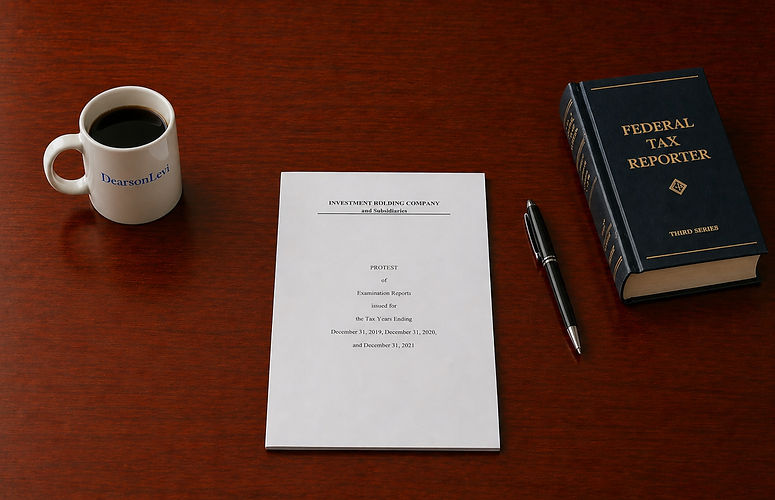
How Long Does IRS Appeals Take?
Timeline, Delays, and What Affects Timing

One of the most common questions taxpayers ask is:
How long will IRS Appeals take?
The answer varies - but in most cases, the Internal Revenue Service Appeals process takes approximately 6 to 18 months, depending on complexity, IRS workload, and how well the case is prepared.
Understanding the timeline is critical to managing expectations, planning effectively, and maintaining leverage during the process.
In practice, the timeline is often influenced by how the case is prepared and positioned before entering Appeals.
Typical IRS Appeals Timeline
Most cases take:
-
6 to 18 months
-
Complex cases may take longer
In many cases, the timeline is driven less by the IRS - and more by how the case is prepared and positioned.
The way the case is developed at the outset can materially affect both the duration and the outcome.
Breakdown of the Timeline
1. Protest Preparation (Weeks to Months)
Time required to prepare and submit the protest.
Preparing a strong submission is critical.
The quality of the protest often determines how efficiently the case moves through Appeals.
See how to prepare an IRS Appeals protest - where early positioning can influence both timing and outcome.
2. Case Transfer (2 - 6 Months)
Delays often occur due to IRS backlog and administrative processing.
3. Appeals Review (3 - 9 Months)
The Appeals Officer reviews:
-
Facts
-
Legal arguments
-
Supporting documentation
This stage is where most of the substantive analysis occurs.
How the case is presented at this stage can significantly affect both timing and settlement posture.
4. Appeals Conference
Discussions and negotiations take place, often determining the direction of the case.
Many taxpayers misunderstand this stage. See common mistakes in IRS Appeals.
5. Resolution or Litigation
The case is either:
-
Settled through negotiation, or
-
Proceeds to court.
To understand how these decisions are made, see the IRS Appeals process.
Each stage builds on the record created before it - mistakes early in the process can significantly extend the timeline.
What Causes Delays
1. Complexity of Issues
More complex legal and factual issues require additional analysis.
2. Incomplete Record
Requests for additional information can significantly slow the process.
3. IRS Workload
Backlogs within Appeals can affect timing.
4. Strategic Decisions
Many of these factors can be influenced - or mitigated - through strategic preparation before and during Appeals.
Delays are often tied to preparation and strategy - not just IRS backlog.
How to Reduce Delays
-
Submit a well-prepared protest
-
Ensure facts are complete and consistent
-
Anticipate IRS questions
-
Align strategy early
Many of these issues are discussed in more detail in common mistakes in IRS Appeals.
When Timing Matters Most
Timing becomes critical when:
-
Financial reporting is affected
-
Cash flow is impacted
-
Business transactions depend on resolution
In these cases, delays can have real financial consequences beyond the tax dispute itself.
When timing affects financial reporting, liquidity, or transactions, early strategic decisions become critical.
Strategic Insight
Speed is not always the goal - outcome quality often matters more than timeline.
In many cases:
-
Rushing the process reduces leverage
-
Strategic pacing improves results
An efficient timeline is valuable - but a well-positioned case is far more important.
In many cases, outcome quality - and negotiating leverage - are determined before Appeals discussions even begin.
Bottom Line
IRS Appeals timelines are not fixed - they are influenced by preparation, positioning, and strategy.
Early decisions can materially affect both how long the process takes and how it resolves.